
| Quick answer
Work stress keeps your body in alert mode, which makes it hard to fall asleep or stay asleep. A bad week around a deadline is common. If poor sleep happens at least three nights a week for three months or more, it may be insomnia, and cognitive behavioral therapy for insomnia is often a recommended first treatment. |
If your brain treats bedtime as the quiet moment to catch up on everything you pushed aside all day, you are far from alone. It is one of the most common complaints among busy professionals. And it tends to turn into a loop: stress ruins sleep, bad sleep makes you more reactive, and the next day’s stress feels even bigger.
Read on to learn why work stress and sleep often collide, what happens in your body, what you can change this week, and how our team specializing in sleep disorder treatment can help.
Why work stress wrecks your sleep
Stress switches on your body’s alarm system. Your heart rate, alertness, and stress hormones rise. That is useful before a big presentation and unhelpful at midnight.
Many professionals also never give that system a chance to power down. There are emails until bedtime, a laptop on the couch, and a phone on the nightstand. Your mind gets its first quiet moment at night, so every unfinished thought shows up at once.
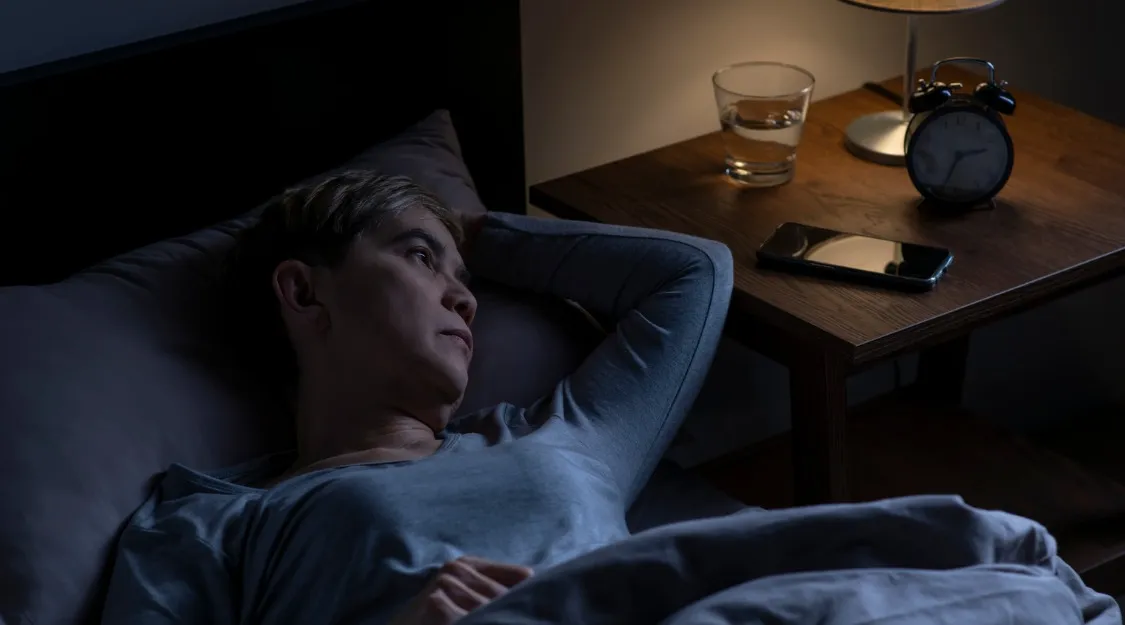
Then comes the part that turns a rough week into a pattern. You start to dread bedtime because of the thoughts that surface in the dark. You watch the clock. You turn on a podcast or audiobook to distract yourself. You try harder to fall asleep, and trying hard is the opposite of what sleep needs. Over time the bed itself can become a cue for alertness instead of rest.
Signs it is more than a rough week
- You struggle to fall asleep or stay asleep on most nights
- You wake at 3 or 4 a.m. and cannot get back to sleep
- You dread bedtime or start worrying about sleep before you get into bed
- You rely on alcohol or sleep aids to switch off
- You are tired, irritable, or foggy during the day and caffeine barely helps
- Your anxiety builds on Sunday evenings. Our post on Sunday night anxiety may sound familiar.
Clinicians generally talk about insomnia disorder when trouble sleeping happens at least three nights a week for at least three months and affects daytime life. If that is you, it is not a personal failing. It is a recognized, treatable condition.
Habits that make sleep quality worse
- Late caffeine. It can linger in your system for hours. Many sleep experts suggest stopping at least six hours before bed.
- Alcohol as a sleep aid. A drink may help you fall asleep, but it tends to interrupt your sleep later in the night.
- Working in bed. It teaches your brain that bed is a place for problem-solving.
- Screens and news at night. Doomscrolling is not a wind-down. It is more input for a mind that already will not settle.
- Lying there and trying to sleep. The harder you chase sleep, the further it runs.
- Big swings in wake-up time. Sleeping in for hours on weekends can leave you groggy on Monday and wired on Sunday night.
What helps: six changes to try this week
You do not need to change everything at once. Pick two or three and give them a fair try for a couple of weeks.
- Fix your wake-up time. Get up at the same time every day, weekends included. A steady wake time is one of the strongest anchors for your body clock.
- Build a shutdown routine. Set a work cutoff time, write tomorrow’s top three tasks, close the laptop, and spend 30 to 60 minutes winding down. Writing the list lets your brain stop holding it.
- Schedule your worry earlier. Set aside 15 minutes in the late afternoon to write down what is bothering you and the next small action for each item. At night, remind yourself that it is parked for tomorrow’s window.
- Get out of bed if you are awake. If you cannot sleep after about 20 minutes, get up, do something quiet in dim light and go back when you feel sleepy. This keeps your bed linked with sleep.
- Get morning light and move your body. Daylight early in the day and regular exercise both support better sleep. Keep hard workouts away from bedtime.
- Make the bedroom boring. Keep it cool, dark, and work-free. Charge your phone across the room.
| Key takeaway
You cannot force sleep, but you can build the conditions for it. Consistency beats intensity, and small changes add up. |
When self-help is not enough
Trouble sleeping is also often a symptom of something else. Anxiety, depression, burnout, pain, and medical issues such as sleep apnea can all be behind it. A good evaluation looks at the whole picture. If worry is driving the nights, our page on anxiety explains how we help. If you feel drained and flat as well, our guide on pulling yourself out of a burnout spiral may help.
Medication can have a role for some people, usually for a short time and after behavioral approaches. That is a decision to make with a prescriber. Our medication management service can walk through the options, risks, and how long to use sleep aids or medications for mood.
If you often feel dangerously sleepy while driving, or a partner notices loud snoring and pauses in your breathing, see a doctor promptly. Those can be signs of a sleep disorder that needs a medical evaluation.
How Healthy Minds NYC can help
Our team works with high-performing professionals whose stress follows them home. Our sleep disorders page explains what we treat and how we approach it, and our stress page covers the pressure behind it. You can start with a free consultation to talk through what your nights look like.
Common questions about work stress and sleep
Can work stress cause insomnia?
Yes. Stress keeps your body’s alarm system switched on, which makes it harder to fall asleep and stay asleep. Short-term sleep trouble around a deadline is common. When it lasts for months, it can become chronic insomnia.
How many hours of sleep do adults need?
Most adults need about seven or more hours a night, according to sleep medicine guidelines. Needs vary a little from person to person, so how you feel during the day matters too.
Why do I wake up at 3 a.m. when I am stressed?
Stress hormones and an alert mind can pull you out of lighter sleep late in the night. If it happens often, talk to a clinician, because anxiety, depression, alcohol use, and medical issues such as sleep apnea can all play a part.
Should I take sleeping pills for work stress?
Medication can help some people, usually for a short time, and it is a decision to make with a prescriber after trying behavioral approaches. It does not fix the stress that is driving the problem.
Ready to get your nights back?
Book a free consultation with Healthy Minds NYC and take the first small step toward better sleep.